America's School Trust Library
An evidentiary archive of America's school trust lands and funds
If you are a parent, a school board member, or a neighbor of land you have driven past your whole life, this record is about you. Roughly twenty states still hold school trust land, and it is earning money right now. In many of them you cannot easily find out how much it earned last year, who decided what to do with it, or how much reached a classroom — not because the answer is secret, but because the record is scattered across state agencies, court files, and old statutes, and nobody has gathered it in one place.
This Library gathers it and shows its sources, so that a parent at a school board meeting, a reporter on deadline, and a legislator drafting a bill can all check the same shelf and none of them has to take our word for it. Where a state has not published its accounting, the Counting House says so and names it: the silence is part of the record too.
In 1785, two years before the Constitution and four years before George Washington took office, the Continental Congress passed a Land Ordinance that did something quietly radical: it set aside one parcel of land in every six-square-mile township of the new western territories, forever, to fund public schools. The schools didn't exist yet. The townships didn't exist yet. The states that would claim those townships didn't exist yet. But the principle did: before the United States organized itself into private property, it carved out a piece of the public domain for the public's children.
By 1959, when Hawaii became the fiftieth state, the federal government had granted approximately 77 million acres for school trust purposes — an area larger than Italy. The state is the trustee. The schoolchildren of that state, present and future, are the beneficiaries.
-
Find your state
A dossier for every state in the union — start with your own.
-
See the money
The Counting House compares the money, state by state.
-
Read the cases
The Court Room: rulings, filings, and case files.
-
Browse the catalog
The public catalog: legal authorities, case-law texts, key figures, books, and special collections.
Featured special collection
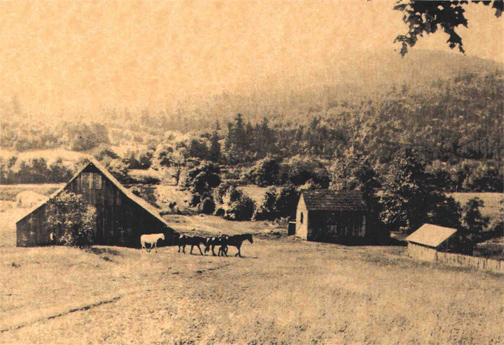
Oregon history, through the people who knew it
Bob Zybach’s collection brings together oral histories, photographs, field recordings and original documents. He is also the Library’s Reference Librarian. Explore Soap Creek, Elliott State Forest, Letitia Carson and the 1828 Umpqua Memorial.
Follow a short research trail →Search the collection →Photograph courtesy of Myra Moore Lauridson and the Soap Creek Schoolhouse Foundation, from the creator’s published collection.
Featured entries
-
Oregon — the test case
Strong constitutional architecture (1857), the Elliott State Forest decoupling (2017–2022), and two separate proceedings: in the 23CV39056 line, the January 28, 2026 Court of Appeals standing decision, made final when the Oregon Supreme Court denied review in S072734 on July 23, 2026; and in Coos County Circuit Court 24CV38372, the July 24, 2026 summary judgment for the State.
-
Utah — the trust under continuous defense
A national model for what an active constituency does: revenue routed school by school made the trust visible to parents, teachers, and principals, and a watchful crew now defends the architecture against successive diversion attempts.
-
Mississippi — the lost inheritance
Section 16 history shows what depletion looks like when no recovery occurred. Sixteenth sections sold for as little as $1 per acre in the 1820s.
America's School Trust Library is an Oregon nonprofit public benefit corporation. How this library is made → · Corrections ledger →