A Forever Gift
Campus
Preview — Pre-publication draft, not yet board-endorsed. See something to fix? Tell us →
America's School Trust Library

Founders' Cabinet

Named scholars, attorneys, foresters, and advocates who shaped the school-trust field.

The Founders' Cabinet honors named scholars and contributors whose work made the school-trust field what it is. The figures gathered here include economists and historians, attorneys and judges, foresters and managers, journalists and policy advocates. Some wrote the books. Some led the reforms. Some spent careers managing the land. The Library names them so the next generation knows the chain it is being asked to join.

The 1785 Confederation Congress committee — Thomas Jefferson, William Grayson, and Hugh Williamson, who drafted the Land Ordinance that created the school-trust idea — belongs in this cabinet too, and will appear in a future expansion. The present shelf is the modern shelf: scholars and contributors from the past five decades whose careers carried the school-trust conversation across the long quiet stretch between 1785 and today.

The cabinet

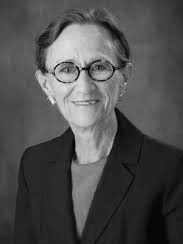
Portrait of Margaret Bird

Margaret Bird

Economist · School trust lands scholar · Utah reform leader

Margaret Bird is an economist and one of the nation's most widely recognized school-trust-lands scholars. She co-founded the national non-profit Advocates for School Trust Lands in Utah in 2000 and served as the Utah Office of Education's School Trust Lands Specialist for many years. In that role she led the historic reform of Utah's school-trust-lands regime, championing constitutional and statutory changes that re-centered the trust on its beneficiary schoolchildren and made Utah a national model for transparent trust accounting. She is co-author, with Dave Sullivan, of Schools of the Republic, and co-author of Oregon's Constitutional Duties to Schools (2025), a 150-page volume documenting the school-trust inheritance and the obligations it carries. Her work bridges economics, public-finance accounting, and constitutional trust law in a field that for decades had no shared vocabulary.

Read the full biographical arc →

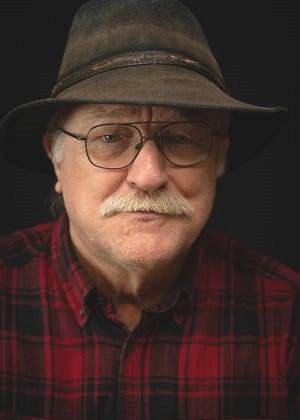
Portrait of Dave Sullivan

Dave Sullivan, Ph.D.

Retired Professor of Business, Oregon State University · Author · Small woodland owner

Dave Sullivan is a retired Professor of Business at Oregon State University and the co-author of three books on Oregon school trust lands, including Oregon's Constitutional Duties to Schools (2025, with Margaret Bird) and Schools of the Republic. He lives with his wife Barb on their 200-acre tree farm in Kings Valley, Oregon, where the working-forest economics he writes about meet the working landscape they steward. He is President of Oregon Advocates for School Trust Lands and a small-woodland owner whose perspective on Oregon's school-trust portfolio is informed by decades inside both the academic literature and the practical realities of timber, taxation, and rural land management. His academic background in systems analysis and public service shapes the framework he brings to the school-trust conversation.

Portrait of Bob Zybach

Bob Zybach, PhD

Environmental scientist · Forest and wildfire historian · Cofounder, ORWW

Bob Zybach holds a PhD in Environmental Sciences from Oregon State University and has built a multi-decade research career on Pacific Northwest forest history, wildfire history, and Indigenous burning practices. He cofounded the Oregon Websites and Watersheds Project (ORWW), a non-profit that assists Oregon students, teachers, residents, and resource managers in documenting and understanding the region's forest landscape. His research has reconstructed the historical fire regimes and human-management practices that shaped the forests of western Oregon long before twentieth-century industrial forestry, and he has authored expert declarations on the Elliott State Research Forest Forest Management Plan. His scholarship is widely cited in Pacific Northwest forest history and wildfire ecology.

Portrait of Laura D. Cooper

Laura D. Cooper, OSB# 863589

Attorney · Civil rights and complex litigation

Laura D. Cooper is an Oregon attorney with a multi-decade career in civil rights and complex constitutional litigation. She previously served as General Counsel for the Pain Relief Network, a national advocacy organization that engaged in high-stakes federal litigation on patient-care and controlled-substances policy. Her practice has spanned constitutional questions, regulatory challenges, and the kind of cross-jurisdictional civil-rights work that requires deep familiarity with both federal and state procedural posture. She brings to the school-trust field the perspective of a litigator who has spent years arguing the boundary between government discretion and enforceable individual and institutional rights — the boundary on which most modern trust-law disputes ultimately turn.

Portrait of Daniel Zene Crowe

Daniel Zene Crowe

Attorney · West Point graduate · Army Ranger · Retired Lieutenant Colonel and JAG officer

Daniel Zene Crowe is an Oregon attorney with a constitutional- litigation practice and an unusually distinguished service record. A West Point graduate and Army Ranger, he served as a JAG officer and retired at the rank of Lieutenant Colonel. After military service he became Oregon's inaugural Veterans' Advocate, building from scratch the office that now serves Oregon's veteran population on benefits, legal services, and policy advocacy. As a constitutional litigator he is best known for Crowe v. Oregon State Bar, a case that tested the constitutional limits of mandatory-bar political speech and produced a published opinion of national interest. He has also served on the Mt. Angel School Board, bringing his constitutional and governance background directly to bear on the day-to-day work of public-school stewardship.

Portrait of Natalie Scott

Natalie Scott

Attorney · The Scott Law Group

Natalie Scott is an Oregon attorney and the founder of The Scott Law Group. She graduated summa cum laude from the University of Oregon School of Law and previously clerked for Judge David Brewer on the Oregon Court of Appeals — a clerkship that places her among the small group of Oregon practitioners with intimate working knowledge of the appellate court whose precedents drive Oregon trust and public-lands jurisprudence. Her practice spans appellate advocacy, complex civil litigation, and the kind of long-horizon constitutional work that requires both record- building at the trial level and precise written argument at the appellate level. Her appellate craft is widely recognized within the Oregon bar.

Portrait of David Gould (1942–2024)

David Gould (1942–2024)

In Memoriam · President of OASTL throughout 2023

David Gould was, as those who worked with him invariably put it, the heart and soul of Oregon Advocates for School Trust Lands. He served as president throughout 2023, carrying the organization through a period of expansion and recommitment to its founding mission. His leadership style — patient, listening, unhurried — set the tone the organization still carries. His passing in 2024 was a loss the Oregon school-trust community continues to feel. The Founders' Cabinet preserves his name in the record so the next generation knows who held the line during years that could easily have seen the work falter.

Portrait pending — AI illustration en route.

Jerry Phillips

Long-term manager of the Elliott State Forest (1956–1989) · Author

Jerry Phillips managed the Elliott State Forest from 1956 until his retirement in 1989 — more than three decades inside Oregon's first state forest and the largest single asset of its school-trust portfolio. His Caulked Boots and Cheese Sandwiches, published by the Oregon Department of Forestry in 1999, remains the definitive history of the Elliott: a working-forester's account of how the land was consolidated, surveyed, logged, replanted, and managed across the twentieth century, with the institutional and personal memory of the people who did the work. The Jerry Phillips Reserve, a legislatively designated portion of the Elliott set aside in his honor, recognizes a career whose contribution to Oregon's school-trust legacy is measured in generations of stand records and the institutional memory that came with them.

Portrait pending — AI illustration en route.

Jerry Franklin

Forest scientist · "The guru of old growth"

Jerry Franklin is one of the most influential forest scientists of his generation, widely known across the Pacific Northwest as "the guru of old growth." His decades-long career in forest ecology helped redefine how scientists, policymakers, and the public understand the structure, function, and value of old-growth forest ecosystems, and his work is featured in the Oregon Encyclopedia. In the school-trust context he authored a four-point peer-review critique of the research design behind the Elliott State Research Forest proposal — a critique that placed a senior forest scientist on the record about the methodological weaknesses of treating school-trust land as a research platform. His contribution to the Founders' Cabinet is the model of a scientist willing to speak plainly when the evidence demands it.

Portrait pending — AI illustration en route.

Francis Elliott

Early-20th-century Oregon State Forester (~1920)

Francis Elliott served as Oregon State Forester in the early twentieth century and is the architect of the consolidation that created Oregon's first state forest. Faced with a fragmented school-trust land base — thousands of scattered sections in the checkerboard pattern produced by the original federal survey — he negotiated the exchange with the federal government that swapped those scattered school-trust parcels for the contiguous block of coastal forest that became the Elliott State Forest, named in his honor. The consolidation made the modern Elliott possible: a working trust forest of a scale that could actually be managed as a single unit for school benefit. Every conversation Oregon has had about the Elliott since 1930 traces back to the exchange he engineered.

Portrait pending — AI illustration en route.

Bill Lansing

President and CEO (retired), Menasha Forest Products Corporation

Bill Lansing is the retired President and CEO of Menasha Forest Products Corporation, one of the long-standing family-aligned timber operators in the Pacific Northwest. Across his career he became one of the industry's clearest public voices on Oregon timber policy and on the long controversy over the management of the Elliott State Forest. He brings to the school-trust conversation the perspective of an executive who managed working forests at scale, ran a payroll, navigated the regulatory and market cycles of the past four decades, and watched from inside the industry as Oregon's school-trust portfolio was transferred, encumbered, and reframed. The cabinet preserves the industry voice because the school-trust story cannot be told without it.

Portrait pending — AI illustration en route.

John A. Charles, Jr.

President and CEO, Cascade Policy Institute

John A. Charles, Jr. is President and CEO of the Cascade Policy Institute, an Oregon-based public-policy research organization. Across decades of writing and advocacy he has examined Oregon's governance of public assets, including the state's trust-lands portfolio, and has produced commentary, studies, and testimony on how Oregon manages — and mismanages — the lands held in trust for its schools. He is one of the few public-policy voices in Oregon to have treated school-trust-lands governance as a serious and recurring subject rather than a footnote. The Founders' Cabinet recognizes that the policy-writing side of the conversation is part of the chain too, and that the case for school-trust accountability has needed editors and essayists as much as it has needed litigators.

Portrait of Marguerite Herman

Marguerite Herman

Journalist · Board Secretary, Advocates for School Trust Lands

Marguerite Herman is a Wyoming-based journalist and the Board Secretary of the national Advocates for School Trust Lands. Her reporting and essay work bring a working journalist's discipline to a field that historically has been written about in either academic or advocacy registers — rarely in the plain, reportable prose she brings to it. She is the author of the ASTL Voices essays, a sustained series that translates the technical apparatus of trust-land governance into language a general reader can follow. Her presence on the ASTL board and in its publications keeps the national conversation cross-pollinated across the school-trust states whose individual records would otherwise stay siloed inside their own state agencies.

Portrait pending — AI illustration en route.

Roy Andes

Montana legal advocate · Recipient, Punctilio of Honor

Roy Andes is a Montana-based legal advocate whose career on school-trust-lands questions has earned him the Punctilio of Honor award, a recognition reserved for sustained and principled legal work on behalf of trust beneficiaries. Montana's school-trust regime — like Oregon's — was forged in the Enabling Act tradition and carries the same fiduciary architecture, and Andes has spent decades inside the Montana version of that architecture, building the legal record and the argumentation that other school-trust states have since drawn on. The "punctilio of honor" phrase comes from Justice Cardozo's foundational opinion in Meinhard v. Salmon: the standard of conduct demanded of a fiduciary. Andes earned the award because the work he has done is measured by that standard.

Eight portraits sourced from substrate; six remain placeholder while AI-illustrated likenesses are prepared. The 1785 Confederation Congress committee — Jefferson, Grayson, Williamson — will join this cabinet in a future expansion.