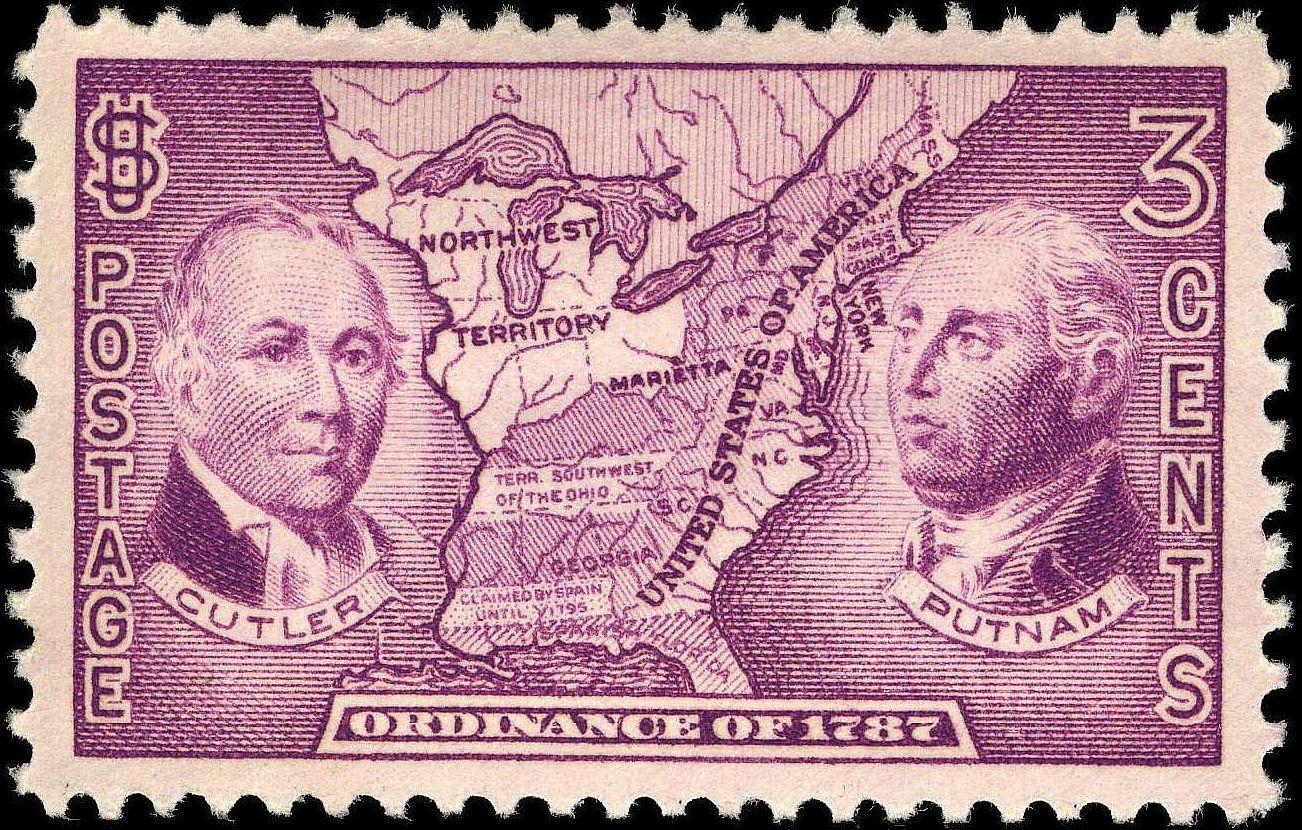
Every U.S. state west of the original thirteen colonies received a federal grant of land at admission, set aside under a trust whose beneficiary is the state's public K-12 school system. That set-aside began in 1785 — before the Constitution, before the Bill of Rights, before either the Republican or the Democratic party existed. It is one of the oldest fiduciary structures in American government.
Yet most Americans have never heard of school trust lands. Most journalists have never written about them. Most state legislators have never read their state's trust-lands accounting. Most lawyers have never litigated a trust-breach case. The legal architecture, financial scale, and political accountability of America's school trusts live in a knowledge gap that has lasted more than a century.
This library exists to close that gap. It is the evidentiary archive — primary sources, state-by-state accounting, case law, scholarly analysis — that anyone who wants to understand or scrutinize this system can use.
The compact
In 1785, two years before the Constitution and four years before George Washington took office, the Continental Congress passed a Land Ordinance that did something quietly radical: it set aside one parcel of land in every six-square-mile township of the new western territories, forever, to fund public schools. The schools didn't exist yet. The townships didn't exist yet. The states that would claim those townships didn't exist yet. But the principle did: before the United States organized itself into private property, it carved out a piece of the public domain for the public's children.
That principle compounded over the next two centuries. The Northwest Ordinance (1787) made it constitutional. The Admissions Acts (one for each new state, beginning with Ohio in 1803) made it specific: when a territory became a state, the federal government granted it sections of land to be held in trust, in perpetuity, for the support of public schools. Some states received one section per township. Others, by the time they were admitted, received four. By 1959, when Hawaii became the fiftieth state, the federal government had granted approximately 77 million acres for school trust purposes — an area larger than Italy.
The legal architecture is straightforward. The federal government granted the land to each state on condition that the state hold it in trust for public schools. The state is the trustee. The schoolchildren of that state, present and future, are the beneficiaries. Trust law — the same law that governs private estates — binds the state to two duties: preserve the corpus, and apply the income to the beneficiaries' purpose. A state may sell the granted land or invest its proceeds, but the corpus and its earnings remain forever dedicated to public education.
This is not a metaphor. It is a structural commitment that has survived two hundred and forty years of legal and political weather. In the states where it has been honored, it has produced permanent funds in the billions of dollars. Utah's school trust corpus crossed $3 billion in 2023. New Mexico's exceeds $25 billion. Texas's exceeds $50 billion. The dividends and earnings flow to public schools every year, in some states paying for a meaningful share of K–12 operating costs.
The drift
In the states where the trust has not been honored, the same architecture exists on paper, and the trust funds either are a fraction of what they should be — or do not exist at all. The Library's forward-looking writing catalogs five categories of how this happens: drift by omission, drift by attrition, drift by capture, directed seizure by stealth, and directed seizure by floor vote. Some states sold the granted land for far less than it was worth (Mississippi sold many of its 16th sections for as little as $1 per acre in the 1820s). Some states diverted the trust income to general operating budgets and stopped distinguishing it from any other state revenue. Some states quietly amended their constitutions to permit asset transfers that the original trust would have forbidden. Some did not bother to amend.
The result is a national patchwork. Some states publish enough school-trust accounting for public audit; many still do not. Of the fifty states, some have permanent funds intact and well-funded; some have them intact but weakened; some have lost them entirely; some never had them at all (the Original 13 colonies predated the federal land-grant template, and a few states were admitted under unique terms). The Counting House makes this visible.
How to read this site
The Library is organized around three entry doors, each pointing at a different way in.
Door 1 — Understand the argument
The Library's Writing Room holds the synthesizing argument: Schools of the Republic, Stewards of the Republic, the hornbook draft, and the case-file writing. The Reading Room carries the curated catalog and a per-state dossier for every state in the union. Start here if you want to understand what school trust lands are and why they matter.
Door 2 — Find the evidence
Three rooms carry the evidentiary record. The Atlas maps fifty states under four lenses (admission cohort, permanent fund corpus, federal grant acreage, transparency status). The Counting House compares the money — every numeric cell carries a confidence indicator (verified, awaiting state disclosure, or not applicable). The Map Room renders the cartographic record: where the trust lands are today and how well each state publishes their locations.
Door 3 — Join the watchful crew
The Watchful Crew is the standing call: school-board members, parents, journalists, and lawyers who can apply this evidence in their own state. The contribute page describes how to add a source, flag an error, or surface a story we should be covering. The missions page lists current asks.
Current activity
The Newsroom carries the Library's running editorial digest of school-trust-lands news, court rulings, and trustee actions across the fifty states. Voices carries first-person testimony from the watchful crew. Updates is the institutional changelog of what the Library has shipped and when — not a room, but a record.
Every numeric figure on this site carries one of four signals. Verified means we have a public source for that figure. Awaiting State Disclosure means the state has a school trust and the figure exists but the state has not yet published it. Disclosure unknown is the rung below: the state has a school trust, but we don't yet know whether the underlying data has been published, internally tracked, or simply isn't kept. The em-dash (—) appears in place of a value when the figure does not apply — typically because the state is one of the Original 13 or was admitted under terms that didn't include a federal school-land grant.
The badges are the point. The fastest path to credibility for a public ledger of public trusts is visible incompleteness with correction pathways. If you see a state with an Awaiting State Disclosure badge and you have a public source, the Records Room (when it opens) will accept your contribution.
Where to go next
The featured entries on the homepage are the three proof paths: Oregon (the live test case), Utah (the recovery case), Mississippi (the lost inheritance). Or jump to your state. Or scan the national map. Or audit the ledger.
This library opened in May 2026 and is being expanded continuously. If you find an error, a missing source, or a story we should be covering, please tell us — see About.