The Zybach Collection · Elliott oral history · November 8, 2017
On the road to Dean Mountain
A road, a forest, and forty years of change · Listen & read · 5 minutes
What changes when you return to a forest after forty years?
Ride toward Dean Mountain with Jerry Phillips, David Gould, Bob Zybach, Amber Ross and Randy Wiest. A road built by the Civilian Conservation Corps opens a conversation about work, changing forestry goals and a familiar landmark.
These are the participants’ memories and judgments. Hear their voices, follow the published words, and explore the place they are talking about.
November 8, 2017 · Tape 7-C · 16:46–21:54 One continuous excerpt from the original field recording.
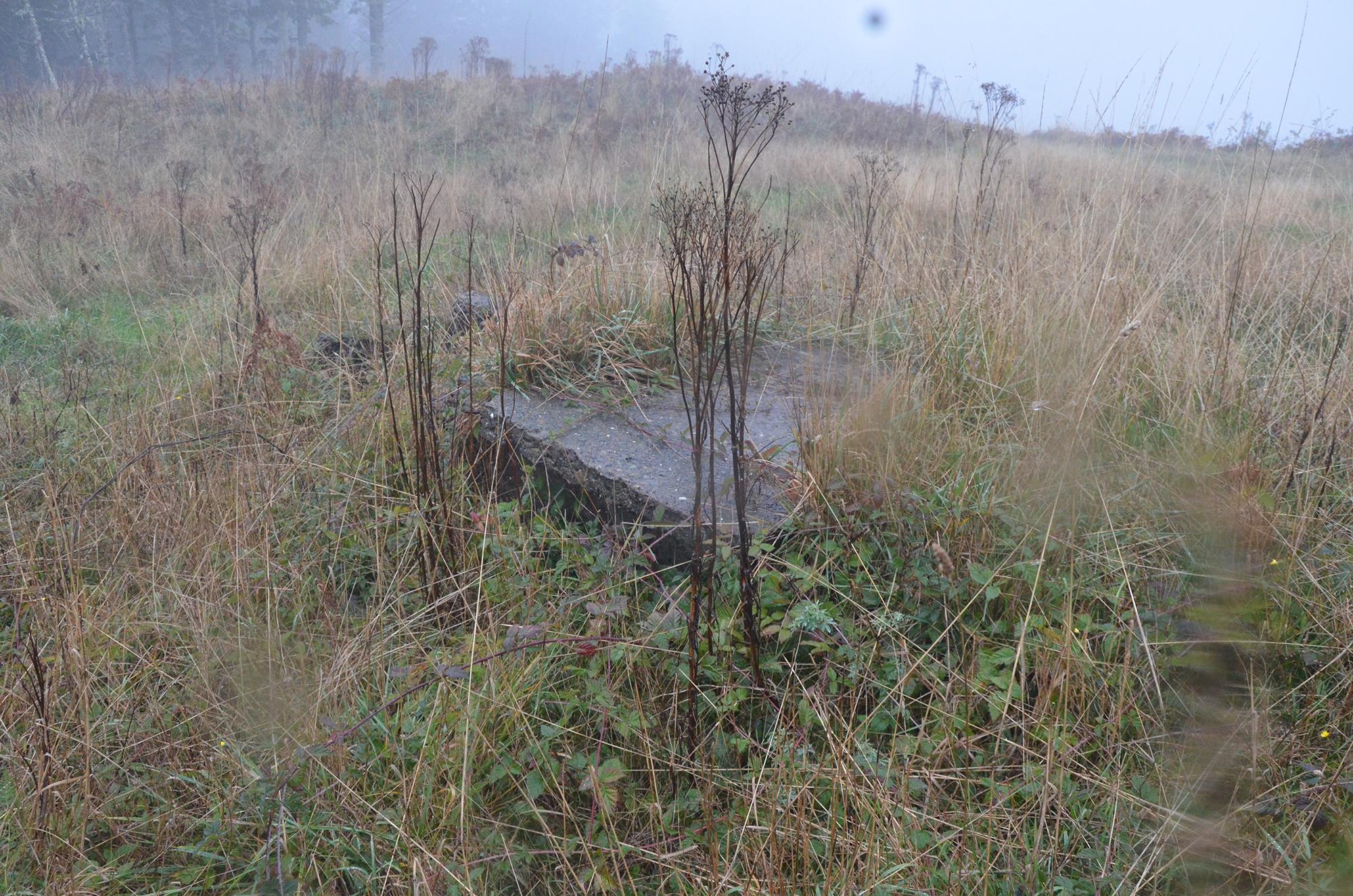
“Deans Mountain,” frame 0989, November 8, 2017. One of four photographs listed for this stop in the published transcript. Photographs from the tour. Source: Bob Zybach / ORWW collection.
Select a passage to hear it. The text below preserves the published transcript, including its edits and bracketed notes; spoken wording can differ. Highlighting follows passages, not individual words. About the source and timing
David Gould: It doesn't look too much different when my grandparents brought me out here. Except it's got rock on it, it didn't have rock then. p. 140
Timing is approximate for quiet or overlapping remarks.
Reading the forest
Current passage
David Gould: They're filling [forested] holes. See how much opening you get in these groves? Guess that's what those birds need to land in. p. 140
Timing is approximate for quiet or overlapping remarks.
Remembering the CCC crews
Current passage
Jerry Phillips: It still amazes me, when they built their camps, they swore they were not going to lose a single day's work, ever. And they didn't. They carried that out for seven years. They never lost a day's work, and they took Sunday off. And they never killed a man. Here are all these 18, 19 year-old boys, p. 140
Jerry Phillips: no hard hats, no canopies for the tractors, using explosives all the time, never killed a single kid. p. 141
Continued from page 140; speaker inferred from the printed paragraph.
David Gould: They got a lot done, too. It’s not a very big camp where we’re going. p. 141
Timing is approximate for quiet or overlapping remarks.
Work and recollection
Current passage
Jerry Phillips: They broke all of today's industrial accident rules. p. 141
David Gould: That's why they're still alive, I guess. p. 141
Randy Wiest: They focused on staying safe instead of being protected? p. 141
Jerry Phillips: Well I went around and interviewed three of them for my book, and I found all those three. p. 141
David Gould: Kids from the city, too, they got some of them. p. 141
Jerry Phillips: Scattered all around western Oregon, and Charleston, Brownsville, all these different places. Of course some went back home again. Some were from Missouri. p. 141
Timing is approximate for quiet or overlapping remarks.
Would you manage it differently?
Current passage
Bob Zybach: Jerry, if you had to do it over, would you still have them convert the myrtle to fir, or would you tend to just leave the myrtle as it is? p. 141
The original mission
Current passage
Jerry Phillips: Well, we have so little of it that that was never really a question that we dealt with. We probably would have left it, since there's so little, but the mission was, originally, to try to grow pure Douglas fir on all the land that was available. p. 141
The former management aims
Current passage
Jerry Phillips: Of course, you had to try to harvest all the old-growth fir, get rid of it, ‘cause it wasn't growing, and get rid of all the alder, ‘cause it was worthless, and then get pure Douglas fir in all the rest. So you would eliminate maple -- of course, we had very little maple -- and myrtle, which was also very, very little. p. 141
A different emphasis
Current passage
Jerry Phillips: But we're living in this day and age where we're celebrating diversity of all kinds, so we probably would've been directed at an HCP [ESA Habitat Conservation Plan] to keep it. p. 141
Toward the lookout
Current passage
David Gould: You all want to go down to the waterhole first? p. 141
Bob Zybach: Sure, and we got to come back this way too, don't we? p. 141
David Gould: ‘Cause the waterhole's down that way and the lookout's down that way. p. 141
Jerry Phillips: Well, you want to turn right here. p. 141
Dean Mountain is the destination named in the stop heading. This map shows the Library’s existing place record; it does not trace the vehicle’s position during the recording.
The map could not load. The list below carries the same places.
Basemap: USGS The National Map. Pan and zoom with the mouse or the + / −
controls; select a marker for its name and a link.
Place in this recording (1)
Dean Mountain — summit · 2 stops43.61444, -123.97971
Contributors: Jerry Phillips and David Gould, narrators; Bob Zybach, interviewer; Amber Ross and Randy Wiest, participants. Recording, published transcript and photograph catalog: Bob Zybach / Oregon Websites & Watersheds Project (ORWW). America’s School Trust Library prepared this excerpt, passage timing and listening page with AI assistance.
The displayed words and speaker names come from the published transcript, entries 2641–2675, with the wording preserved. Paragraphs are grouped for listening; the passage titles and learning question are the Library’s additions. Square brackets belong to the published transcript and need not represent spoken words.
The audio is a continuous 5:08 excerpt with no internal cuts; its level was reduced slightly to prevent distortion from encoding peaks. Two machine transcriptions were compared with the published text to place the passage markers. This is approximate passage alignment, not a verbatim caption track or a completed human listening review. Short or overlapping remarks may not match the highlight precisely. The native player lets you replay or adjust the position.
The four stop photographs are linked by their printed frame numbers, not by an exact second on the tape. The original PDF’s filename contains “20191108”; its interview title and page footers identify November 8, 2017.
Recorded purposes and copyright
In the opening of this tour, Bob describes Internet publication, transcription, education and research uses. The published opening transcript, page 2, records David Gould’s assent; Bob describes earlier agreement by the other participants. Separate checks of the recording channels recovered the brief affirmative replies; speaker attribution follows the printed transcript.
Recording and transcript: In Copyright. This educational listening page grants no general license to reuse the recording, transcript or photographs. See the Collection’s individual rights statements, including the photograph’s status.