The life's work of Dr. Bob Zybach: Oregon forest history, oral history and historical ecology
Places. People. The record they leave.
Explore Oregon through the work of historian Bob Zybach and the people who helped make it. Follow a question from a remembered landscape to a printed page, a photograph or a voice.
Journals, letters, Bob’s writings and the modern memorial project, including the recorded Native account.
Image credit
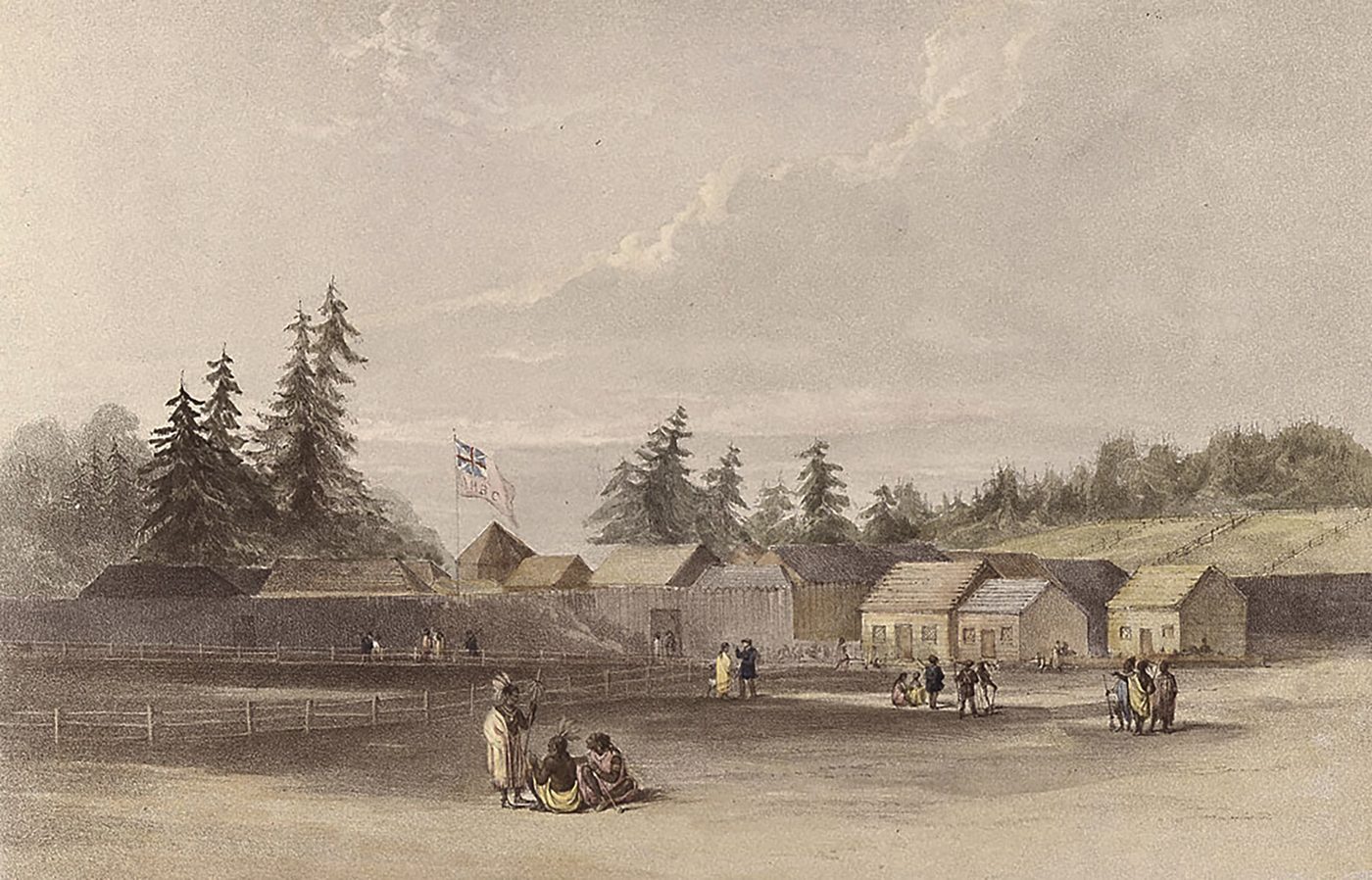
Fort Vancouver, 1845 or 1846 · Henry J. Warre, as dated in Bob’s caption.
This is a reading edition: transcribed pages are readable here, with links to the creator’s originals. A page link opens the cited passage in its surrounding text. How to read and cite it →
A valley remembered
Soap Creek Valley is a small farming valley in northern Benton County,
Oregon, a few miles north of Corvallis. Between 1975 and 1995 the people
who had spent their lives in it — farmers, loggers, schoolteachers, a
botanist, a Civilian Conservation Corps enrollee, and the foresters who
came to manage the hills above them — sat down with a tape recorder and
told the valley's history in their own words.
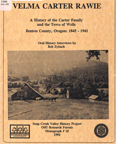
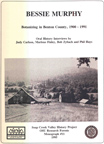
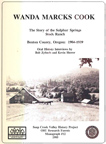
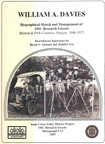
Twenty-one of them are here. Their interviews were printed as fifteen
books between 1990 and 2009, indexed and cross-referenced so that a
sentence about a creek in one book leads to the same creek in another.
The tapes are at Oregon State University. This collection is the whole
of that work, made readable page by page, with a second body of
recordings made a generation later on the Elliott State Forest.
The recording was not one man's doing. Royal G. Jackson and Jennifer Lee
began in 1978, Karen Thomas joined in 1980, and Bob Zybach — who edited
the series and carried it into print — recorded from 1989. Research
assistants, students and transcribers worked on it too, and each book
names its own.
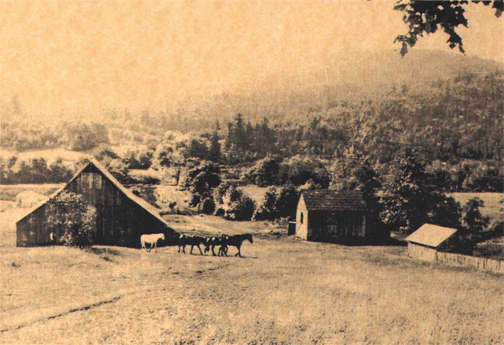
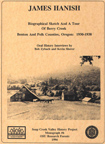
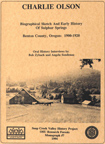
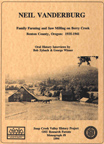
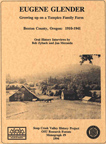
The Moore family farm on Soap Creek, photographed about 1899 or 1900 by Samuel H. Moore. The creator puts it at the head of the series, and nine of the fifteen books carry it on their covers. Reproduced courtesy of Myra Moore Lauridson and the Soap Creek Schoolhouse Foundation, from the creator's own pages at nwmapsco.com.
What they said
Every passage below is printed exactly as it stands in the book, and every one links to the page it came from, where the sentence before it and the sentence after it are waiting.
Yeah, the oaks were there first and they'd died off because the firs grew up and shut off the sun. You had to be very careful in working in there because you'd go up to a tree that looked like a small oak tree and you could tell it was dead because the bark would be off of it and you could push it right over, because the firs, they reach for the sun right away and the oaks lost out.
You go down to the school house. And there was a little creek that came down from up above and we got our water for the school house out of that little creek. There isn't any creek now. Right below the school house was a bridge across Soap Creek. That bridge floated out three different times while I was a kid and right now I don't think that creek was over it's banks.
Charlie OlsonFarmer, auto mechanic, sawmill worker, school bus operatorMonograph #07, page 33
Well, yes. It was a link, link with your neighbors. Party line, everybody was on the line. And if you were smart, you wanted to be careful what you said, because you knew your neighbors were listening in.
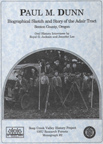
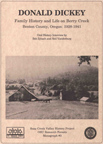
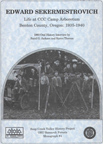
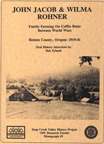
One valley, one book at a time, each named for the person who talks in
it. Open a cover and you get the front matter as printed, the recording
sessions, the transcript page by page, the photographs and the index.
Forty years after the Soap Creek tapes began, Bob Zybach did the same
thing on the Elliott State Forest, in Coos and Douglas counties: drove
its roads with his narrators, recorded what they said at each stop, and
tied every stop to a minute on the tape and a page in the transcript.
Then he went back with a camera. Nineteen videos follow the same
ground — field trips, class sessions and talks.
The Elliott was school trust land for most of a century, until the
State Land Board decoupled it from the Common School Fund in 2022.
That is why a school-trust library keeps this part of the record.
A still from "2020 ELLIOTT FIELD TRIP #1: Elkhorn Ranch, April 9, 2020", one of nineteen videos on the creator's own playlist. Frame from the creator's video, ORWWmedia.
Start here
You live nearby, or you drive through
Explore the 1989 Auto Tour online: eleven historic stops, each with its original account and illustrations. The places index connects named places with the available recollections that mention them.
Start with the Series Index. It brings together the names in all fifteen books and links to the printed pages where they appear. The People directory adds profiles of the narrators, interviewers and contributors; other people named in the books can be found through the index.
Start with the evidence. Every printed page has its own permanent link, the 1999 thesis shows how these interviews were tested against maps and photographs, and the timeline sets the narrators’ dated statements side by side, disagreements included.
Bob Zybach's work runs wider than these two forests. Two more bodies of
work are now described item by item, and four are described at inventory
level — what exists, where it is, and what the Library has decided about
each.
Letitia Carson, 1845–1888Born enslaved in Kentucky, over the Oregon Trail in 1845, twice a plaintiff against the man who administered her partner’s estate, and a homesteader in her own name from 1863. 251 documents described; the case file and the probate files reproduced page by page, with the creator’s own writings on her.
Jedediah Smith and the 1828 Umpqua MemorialThe journals and letters of the 14 July 1828 attack at the mouth of the Smith River, and the record of a modern project to mark it — a state highway marker, a memorial stone, and a four-day rendezvous over the route of 1828. Eleven of the creator’s writings, page by page; the site itself is not located here.
The Alberta Street ProjectStudent research and community history in North and Northeast Portland. A source guide helps you compare the 1992 and 2015 neighborhood reports, with reading questions and links to the originals on ORWW. The reports and interviews are not republished here.
The Osbornes ProjectPanoramas made from Oregon fire lookouts with an Osborne camera in the 1930s, rephotographed from the same points from 2006. Described here; the creator keeps this work with his wildfire and forest-restoration program on orww.org, and the Library points there rather than making a second copy.
Oregon wildfire and forest restorationThe creator publishes his fire-history and forest-restoration work himself, on orww.org; the Library points readers there rather than making a second copy.
Reforestation business recordsContract reforestation business records, 1972–1990, held at Oregon State University; described here and published nowhere on this site.
Where this collection is
The map could not load. The list below carries the same places.
Basemap: USGS The National Map. Pan and zoom with the mouse or the + / −
controls; select a marker for its name and a link.
Soap Creek Valley — about
44.70° N, 123.27° W. A 15,000-acre sub-basin of the Luckiamute River in
northern Benton County. Fifteen books, the 1999 thesis, the 1989 Auto
Tour.
Elliott State Forest — about
43.60° N, 124.00° W. Coos and Douglas counties, inland from Reedsport.
Interviews, field tours, route maps, photographs, videos.
Both coordinates are approximate regional centres chosen for this overview
map, not survey positions. Place coordinates on the series pages carry
their own method and confidence.
How big it is
15printed books
1,591printed pages
21people interviewed
1,071places named
12,618index references
1,571dated statements
6Elliott interviews
19Elliott videos
156Elliott photographs
Counts are of what the Library has described so far, not of everything the creator holds. The six series above are counted as descriptions, not as items.
About this collection
Scope
Materials documenting Oregon forest and pioneer history: the Soap Creek
Valley oral histories and the research built on them; the Elliott State
Forest's management, ecology and public history; Oregon coastal fire
history; and related Oregon pioneer-history projects where they help
readers understand the school trust record.
Dates
Soap Creek interviews were recorded between 1975 and 1995 and printed
between 1990 and 2009. The Elliott interviews and field trips were
recorded 2017–2019, with videos to 2024. Two earlier tapes the creator
collected and published alongside the Elliott material date from 8
October 1962 and 11 November 1965. Oregon State dates its own Soap Creek
collection 1978–2009 and its Elliott collection 2017–2022.
Who made it
Dr. Bob Zybach is the creator of this collection and the editor of the
Soap Creek series; he is not its only author. Oregon State University's
finding aid for the same oral histories lists five creators: the OSU
Research Forests' Soap Creek Valley History Project, Royal G. Jackson,
Jennifer A. Lee, the Oregon State University College of Forestry, and Bob
Zybach. The Soap Creek work was funded by the OSU Research Forests and the
College of Forestry; the Elliott work by the Oregon Department of State
Lands and the OSU College of Forestry.
Bob is also the Reference Librarian of America’s School Trust Library.
About the creator.
Arrangement and access
Arrangement. Series follow the creator's own project
divisions. In Soap Creek the unit is the printed book and the page as
printed; on the Elliott it is the interview date, the tape side and the
minute. Both come to the same thing: a stretch of talk about a place, at
a time, on a record.
Open. Everything published here is open for research.
The Library asks for attribution and correction, not permission.
Held. A small number of pages are held back and shown
as held, with a reason, rather than quietly removed. They can be
requested.
Held at Oregon State, not here. The reforestation
business records are described here and published nowhere on this site.
The same material at Oregon State
The Library holds preservation copies of the digitized recordings supplied by Oregon State University. Those copies remain private while the rights questions are resolved. The original collections and request information are described in the finding aids below; selected public excerpts are linked from the reading trails.
Accessioned from Bob Zybach's upload of the 'ORWW Special Collection' shared Drive folder, together with material fetched from his public project sites nwmapsco.com and orww.org. Every item record carries its source URL or Drive path and a SHA-256 checksum of the file that was read.
Oregon State University Special Collections and Archives Research Center — finding aids linked below
Rights
This is a working edition, published with the creator’s permission while rights and consultation reviews continue. The material here was made at different times, under different agreements, by different people, so each part of the collection carries its own rights statement rather than one label across all of it. The indexes and apparatus are the Library’s own work and an open licence for them is under consideration. How the Library decides what it can publish, and how to ask for a change.
Rights, use and takedown sets out how the Library
decides what it can publish, and how to ask for a change.
Citing this collection, and how it was made
Cite the book first and this page second; both forms are set out on the
citation page. How the pages were made, and by what, is in the colophon.
Corrections already made are listed on the errata page.