Scholarship · Tier 3 · in-copyright · curator-recruitment open
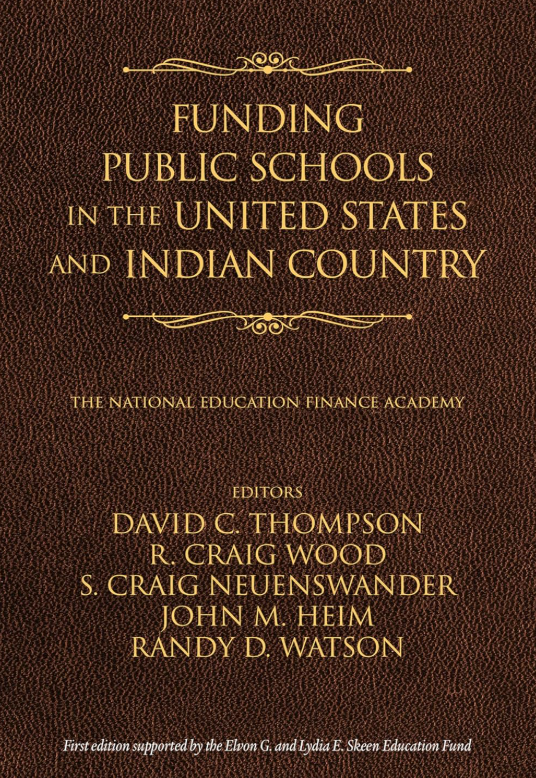
Funding Public Schools in the United States and Indian Country
Scholarship · Tier 3 (in-copyright; curator-recruitment open). This editorial summary is a Library editorial-team draft. The Library is recruiting a Title Steward who has institutional access to this work — see /contribute/ for the role definition.
Why this matters
This is the only current single-volume reference covering P-12 funding mechanics across all fifty states and Indian Country in one place. Schools of the Republic tells the historical story of how the school-trust-lands grants were made; this volume tells the contemporary story of how each state actually funds its schools today — including the residual role (or absence of one) for trust-lands distributions. For any reader trying to understand whether a particular state’s permanent fund still meaningfully supports its schools, this is the practitioner reference of record. The combined editorial team brings academic, state DOE, and ASBO experience.
What’s in it
The volume is organized as a 50-state-plus-territories survey, with each state chapter typically authored by a state DOE finance officer, a school-finance academic, or an ASBO member from that state. A Title Steward should verify the exact chapter structure against the publisher’s catalog page.
- Front matter: editors’ introduction situating the volume in the school-finance literature.
- A foundational-formula primer chapter — the basic vocabulary of foundation, guaranteed-tax-base, and full-state-funding models.
- Fifty state chapters, each typically covering: constitutional/statutory funding framework; basic aid formula; categorical aids; capital-construction funding; the role of the permanent school fund (where one exists); recent litigation.
- Indian Country chapter(s) covering BIE schools and tribally-controlled school funding mechanics.
- Cross-cutting chapters on adequacy, equity, and federal-funding interaction.
- Appendices with comparative tables.
Most-quoted passages
The editorial team has not yet verified short verbatim passages from a free preview. The Title Steward, working from a copy in hand, should add up to three short quotations under thirty words each, fully cited. We have deliberately omitted quotations rather than fabricate them.
How it connects to the Library’s argument
The Library’s empirical anchor is that the school-trust grants of 1785, 1787, and the state-by-state Admissions Acts created a permanent, beneficiary-specific revenue stream for common schools — and that the question of whether a state has honored that compact is partly a question of whether the trust-lands revenue is still flowing to schools as the granting acts contemplated. Funding Public Schools in the United States and Indian Country is the contemporary other-side of that ledger. Where Schools of the Republic establishes what each state was given and promised, this NEFA volume establishes what each state currently does — and the chapter-by-chapter treatment makes visible where the trust-lands revenue has been diluted, redirected, or simply allowed to fade against the scale of modern foundation-formula spending. The volume is also the most useful single artifact for translating between the historical-trust vocabulary of the Sacred Compact and the contemporary school-finance vocabulary that legislators, school boards, and adequacy-litigation plaintiffs actually use. A Title Steward with school-finance officer experience would substantially sharpen the editorial summary on the trust-lands-relevant chapters.
How to engage
- WorldCat search: https://www.worldcat.org/search?q=funding+public+schools+united+states+indian+country+thompson+wood (find this title at a library near you)
- Interlibrary loan: ask your local library to request it.
- Publisher purchase link: https://www.infoagepub.com/ (search “Funding Public Schools in the United States and Indian Country”)
- Used-book channels (access paths, not commerce): AbeBooks, ThriftBooks, Amazon used.
- Submit a correction or annotation: /contribute/
- Apply to be Title Steward for this book: /contribute/
Curated by
Title Steward — OPEN. This editorial summary is a draft by the Library editorial team, 2026-05-07. We are recruiting a Title Steward who has institutional access to this work and the time to refine the summary into something authoritative. Especially well-suited to law-school faculty, trust-and-estates attorneys, school-finance officers, state-lands-agency staff, and library-science curators of state-finance collections. See /contribute/ for the role definition.