Soap Creek Valley · 1989 Auto Tour
STOP #1 BERRY CREEK [Trapping]
Stop 1 of the 1989 Historic Soap Creek Valley Auto Tour, printed page 7.
12.2 miles from the Peavy Arboretum entrance on the 1989 route. Open these pages in the original PDF · Read the text below
The text, as printed
Find this stop and nearby places on the map
The map could not load. The list below carries the same places.
- Tour stop
- Other place named
On this map
Auto Tour stops(2)
Streams(2)
Valleys(1)
town(1)
Named at this stop
Places. Pacific Northwest · Willamette Valley · Astoria · Berry Creek · Soap Creek
People. David Douglas
Narrators who speak of this place
- #1 Lorna Grabe p. 11, p. 58
- #2 Paul M. Dunn p. 35, p. 41
- #3 Donald Dickey p. 8, p. 9, p. 11, p. 19, p. 22, p. 25, p. 26, p. 27, p. 29, p. 30, p. 38, p. 40, p. 41, p. 43, p. 44, p. 49, p. 55, p. 17, p. 26, p. 33, p. 44, p. 51
- #5 John Jacob & Wilma Rohner p. 5, p. 7, p. 8, p. 29, p. 36, p. 54, p. 56, p. 82, p. 84, p. 92
- #6 James Hanish p. 1, p. 7, p. 8, p. 9, p. 12, p. 13, p. 15, p. 44, p. 53, p. 63, p. 66, p. 76, p. 1, p. 25, p. 30
- #7 Charlie Olson p. 34, p. 123, p. 124, p. 125, p. 132, p. 137, p. 1, p. 4, p. 6, p. 7, p. 11, p. 12, p. 15, p. 16, p. 17, p. 24, p. 32, p. 33, p. 34, p. 35, p. 36, p. 38, p. 39, p. 43, p. 58, p. 59, p. 64, p. 65, p. 71, p. 75, p. 80, p. 82, p. 83, p. 84, p. 91, p. 92, p. 93, p. 94, p. 95, p. 97, p. 101, p. 109, p. 110, p. 115, p. 117, p. 123, p. 124, p. 125, p. 126, p. 127, p. 132, p. 134, p. 136, p. 140, p. 144, p. 145, p. 146, p. 151, p. 167, p. 173, p. 22
- #8 Neil Vanderburg p. 1, p. 4, p. 11, p. 15, p. 44, p. 46, p. 48, p. 50, p. 56, p. 63, p. 68, p. 70, p. 76, p. 77, p. 81, p. 85, p. 86, p. 89, p. 94, p. 95, p. 98, p. 99, p. 103, p. 104, p. 115, p. 120, p. 127, p. 129
- #9 Eugene Glender p. 1, p. 2, p. 6, p. 40, p. 72, p. 79, p. 87, p. 89, p. 92, p. 16, p. 101, p. 109
- #10 Velma Carter Rawie p. 50, p. 57, p. 67, p. 68, p. 57, p. 67, p. 97, p. 98, p. 115
- #11 Bessie Murphy p. 10, p. 39, p. 32, p. 12, p. 18, p. 24, p. 29, p. 32, p. 47, p. 50, p. 69, p. 79, p. 25, p. 93, p. 94
- #12 Wanda Marcks Cook p. 12, p. 8, p. 13, p. 18, p. 21, p. 23, p. 24, p. 30, p. 32, p. 36, p. 38, p. 46, p. 51, p. 54, p. 55, p. 66, p. 73, p. 74, p. 84, p. 85
- #13 WILLIAM A. DAVIES p. 18, p. 24, p. 49, p. 50, p. 4, p. 18, p. 22, p. 50, p. 51, p. 79
- #14 Charles and Norman Hindes p. 3, p. 7, p. 15, p. 45, p. 1, p. 3, p. 5, p. 6, p. 7, p. 8, p. 9, p. 36, p. 46, p. 48, p. 52, p. 56
- #15 Marvin Rowley p. 30, p. 46, p. 107, p. 30, p. 32, p. 34, p. 58, p. 80, p. 99, p. 103, p. 106
Photographs printed with this stop
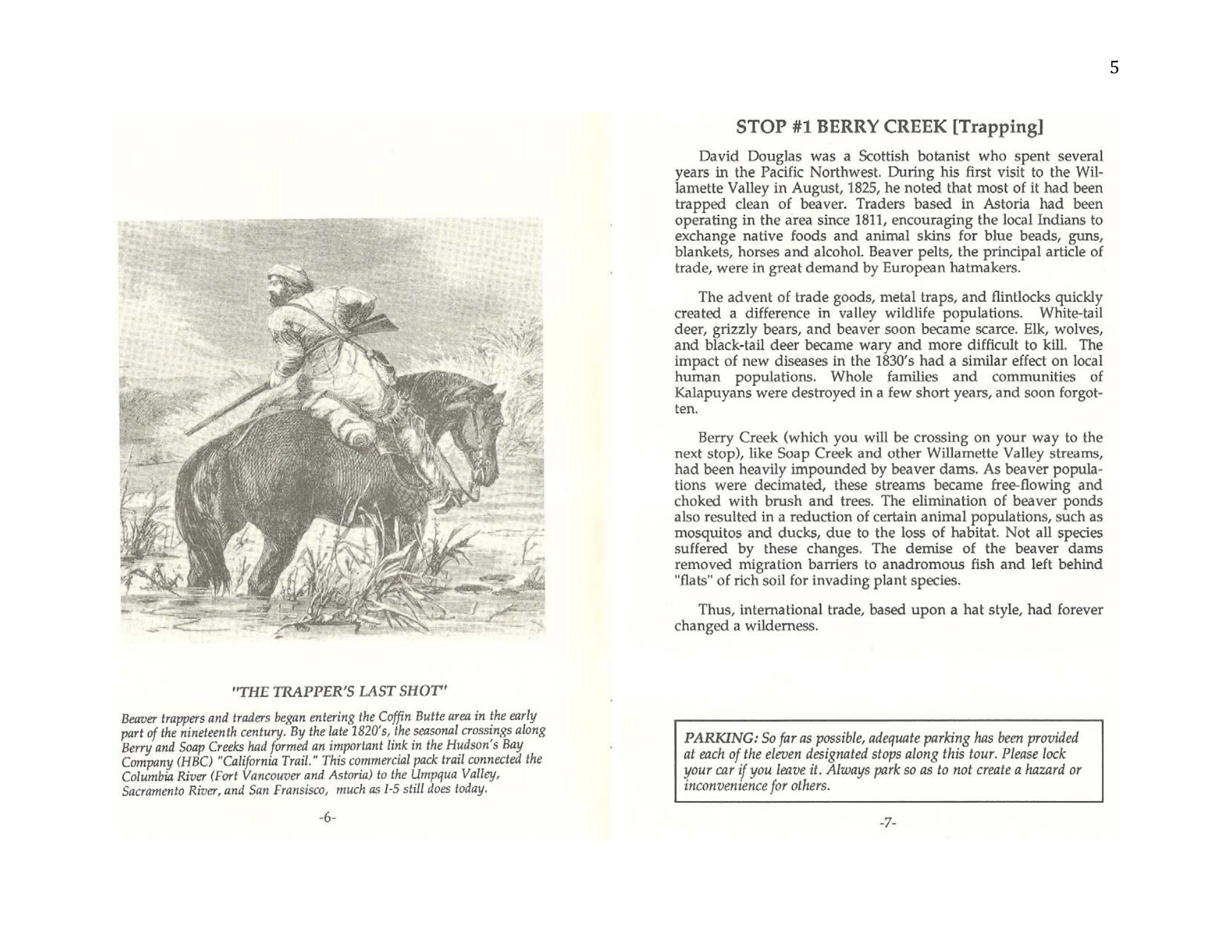
- Beaver trappers and traders began entering the Coffin Butte area in the early part of the nineteenth century. By the late 1820's, the seasonal crossings along Berry and Soap Creeks had formed an important link in the Hudson's Bay Company (HBC) "California Trail." This commercial pack trail connected the Columbia River (Fort Vancouver and Astoria) to the Umpqua Valley, Sacramento River, and San Fransisco, much as I-5 still does today.
Citation and source history
Collection source history · The complete booklet and its credits
How to cite this item
The first line is the citation as it is printed in the original. Use it when you cite the work itself. Use the second when you cite this page.
- As printed
- Zybach, Bob 1989. Historic Soap Creek Valley Auto Tour. Oregon State University Research Forests and College of Forestry, Corvallis, Oregon: 32 pp.
- This page
- Zybach 1989. America's School Trust Library, The Zybach Collection. https://schooltrusts.org/collections/zybach/soap-creek/auto-tour/stop-1/
More on citing this collection: How to cite the Zybach Collection.
Something wrong on this page? Submit a correction — this page is already selected. See how that works.
